A container ship, a bulk carrier and a tanker can all berth in the same port and still ask completely different things of it. One needs gantry cranes and a yard stacked high with boxes; another wants grabs, hoppers and room for a mountain of iron ore; a third wants pipelines, bunded manifolds and a tank farm behind the fence. For anyone booking freight, the vessel type is not a detail you leave to the carrier. It quietly decides which ports can serve you, how your cargo gets on and off, and how long the whole move will take.
Start with what the cargo actually needs
Ship design follows cargo, not the other way round. Four questions shape almost every commercial vessel: is the cargo counted in units or weighed in tonnes, is it dry or liquid, does it move on its own wheels, and how does it physically cross the ship's rail?
A box that a crane can lift gets one kind of ship. A pile of grain that pours down a chute gets another. A truck that drives up a ramp gets a third. A liquid that is pumped through a hose gets a fourth. Once you see that logic, the jargon on a booking confirmation starts to make sense.
Container ships: the box is the unit
Container vessels carry standardised steel boxes — twenty-foot and forty-foot units, plus high-cube and refrigerated variants. Capacity is expressed in TEU, or twenty-foot equivalent units, which is simply a way of counting slots rather than a measure of weight.
Loading is vertical. Shore cranes lift each box from the quay and lower it into a cell inside the hold or stack it on deck, where it is lashed down. A large vessel may work several cranes at once, bay by bay, and the sequence matters: discharge and load plans are worked out in advance so the ship stays stable and the next port's boxes are not buried.
What this means in practice is that container ports need deep water, long berths, heavy ship-to-shore cranes, and a yard with room for stacking, plus reefer plugs if temperature-controlled cargo is involved. Not every port has all of that. Smaller feeders often do the last stretch, which is why a box from Asia to a regional port may travel on two vessels and get transhipped at a hub along the way. That extra move is normal, but it adds days.
Bulk carriers: loose cargo, big hatches
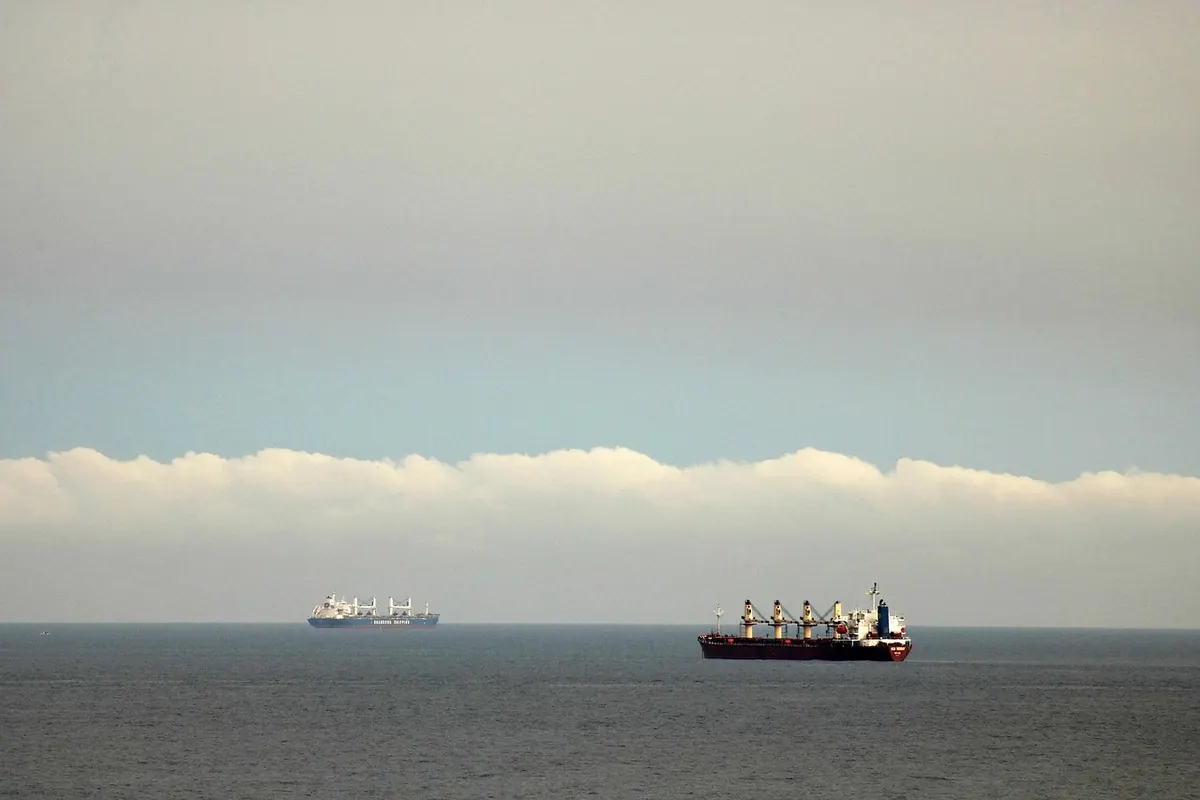
Bulkers carry dry cargo in loose form: iron ore, coal, grain, bauxite, fertiliser, cement, steel scrap, sugar. The ship is essentially a set of large holds under wide hatches, and that shape is dictated by the need to fill and empty fast.
Loading may be by grab crane, conveyor, or a loading chute from a silo or stockpile. Discharge uses grabs, hoppers, pneumatic systems or shore conveyors. Some vessels carry their own cranes and grabs and are called geared; gearless ships rely entirely on the terminal, which is cheaper to run but limits where they can call.
Sizing is a real constraint here. Handysize and Supramax vessels can enter smaller ports and rivers; Panamax tonnage is shaped around canal locks; Capesize ships need deep draft and dedicated terminals and often cannot enter a shallow estuary at all. Ore is dense, so a hold can reach its weight limit long before it looks full — the opposite of a light cargo such as grain or wood chips.
Cargo care matters too. Grain needs clean, dry holds and careful attention to moisture; some agricultural cargoes require fumigation; steel and scrap need protection from the weather. If you are shipping bulk, ask early how the receiving terminal will discharge, because a geared ship calling at a port with no cranes is often the cheapest quote right up until it isn't.
Ro-Ro vessels: cargo that rolls
Roll-on/roll-off ships carry wheeled and tracked cargo — cars, vans, trucks, buses, trailers, and increasingly project pieces on wheels or skids. Instead of cranes, they use ramps. Cargo is driven or towed aboard over a stern ramp, sometimes a quarter ramp or a side ramp, and secured on multiple decks connected by internal ramps or hoistable decks.
Car carriers stack vehicles tightly on adjustable decks. Ro-pax ferries mix freight decks with passenger accommodation, which is why freight and tourist timetables sometimes compete for the same sailings. Trailer traffic usually moves on units called Mafi rolls or on unaccompanied trailers handled by terminal tractors.
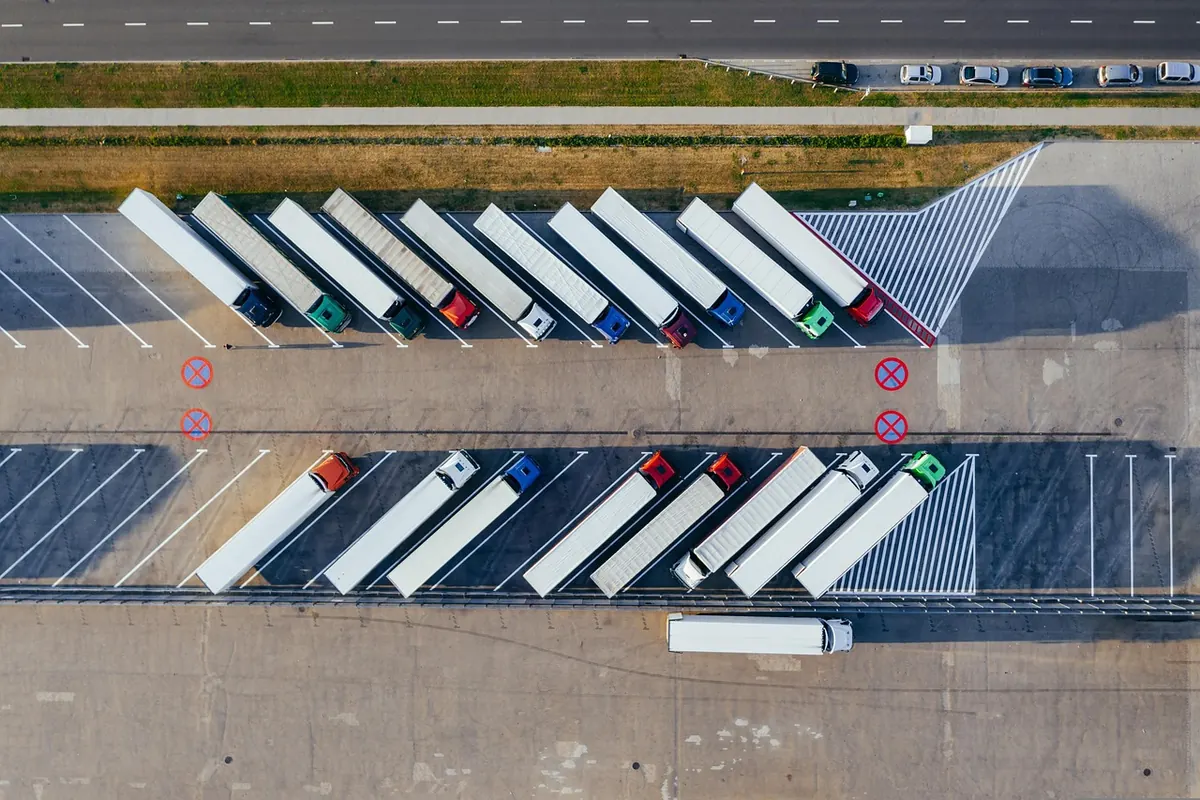
Port requirements are different from a container terminal: a ramp that lines up with the ship's ramp, enough marshalling space to park and sequence units, customs and border facilities for drivers, and secure parking. Draft is less of a headache than access roads and yard space. If the cargo cannot roll, it may still travel on a Ro-Ro vessel on a skid or in a container, but someone has to do the loading engineering first.
Tankers: liquids, pipes and safety
Tankers carry liquids in bulk. Crude oil is the headline trade, but product tankers move refined fuels, chemical tankers handle specialised parcels, and gas carriers move liquefied natural gas or petroleum gas in insulated or pressurised tanks.
Loading is by pipeline, hose or marine loading arm at a jetty. The ship connects at a manifold, and the pumping plan is agreed before a drop moves. Coated tanks, segregated lines and careful cleaning between parcels matter enormously — a chemical cargo contaminated by the previous one is an expensive problem.
Ports need jetties with enough water and safe mooring, pipelines to a tank farm, vapour handling where required, and strict safety zones. Tanker work is slower and more procedural than container work; a berth window can be lost to weather or to a pump failure, and schedules are built with that in mind.
How vessel type shapes port choice and freight planning
Once you know the ship family, the practical questions fall into place. Before you accept a rate, check these against the actual routing:
- Draft and berth length: can the ship enter the port loaded, or will it need to be part-loaded, lightened or handled elsewhere?
- Terminal equipment: does the port have the cranes, grabs, conveyors, ramps or pipelines this vessel needs?
- Storage behind the quay: container yard, silo, tank farm, or open parking space — each serves one cargo type well and the others badly.
- Inland links: rail sidings, barge access and truck routes decide whether the port is genuinely useful or just nearby.
- Schedule frequency: a direct call sounds better until you find it sails fortnightly; a weekly feeder service may still win.
- Documentation and inspections: dangerous goods, phytosanitary checks and customs formalities differ by cargo and can add days.
A useful habit is to work backwards from the receiving end. Who will unload it, with what equipment, and how much space do they have? If a buyer's yard can only take ten containers a day, a ship discharging two hundred boxes in one call changes nothing for the better.
Mixed consignments often need mixed solutions: containers for the boxed goods, breakbulk or Ro-Ro for the oversized piece, a tanker parcel for the liquid. Splitting a shipment across vessel types is common and usually cheaper than forcing everything into one mode.
A short checklist before you book
- Describe the cargo precisely: dimensions, weight, whether it rolls, whether it pours, whether it is hazardous.
- Name the vessel family it fits, then confirm the ports on both ends can actually handle that family.
- Ask how it will be loaded and discharged, and who supplies the equipment.
- Check the full door-to-door time, not just the sea leg; port congestion and inland haulage usually cause the delays.
- Put the handling assumptions in writing with your forwarder, including what happens if a ramp is too steep or a hold is too shallow.
Get those five points straight and the rest of the booking conversation gets shorter, clearer and considerably less expensive.
Photo: Bluesnap / Pixabay